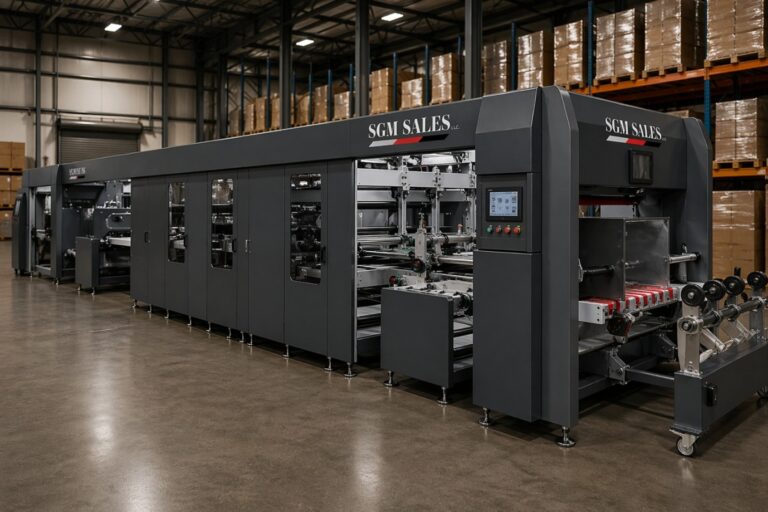
Packaging plants do not buy machines for comfort. They buy them to keep production lines alive. One wrong machine choice slows everything down. A Platen Die Cutter located North America often sits right at the center of carton output, so factories expect it to behave like a production workhorse, not just equipment on paper. Every hour of output matters. Every sheet matters. So expectations stay strict, practical, and very unforgiving.
When A Machine Enters The Line, It Must Prove Itself Immediately
Packaging plants do not wait weeks to judge performance. The first production shift already sets the tone. They watch how the machine behaves under real pressure, not test conditions. Key expectations in the first phase:
- No misalignment during continuous feed
- Stable pressure across full sheets
- No sudden stoppage during job change
- Smooth operator control without confusion
If the machine struggles here, trust drops fast. No second chances.
Output Stability Matters More Than Rated Speed
Factories do not care about brochure speed numbers. They care about what survives a 10-hour shift without drift. A platen die cutter must hold its cutting position even when the workload increases. Many buyers compare options with a pre-owned Bobst Die Cutter because it has already run in heavy-duty production cycles across different plant setups. Plants focus on real questions like:
- Does output stay identical from start to end of shift?
- Does pressure consistency drop under load?
If consistency breaks, speed becomes useless.
Breakdown Patterns Decide Long-Term Value
Packaging plants track machine behavior over time, not just day one. They quickly notice patterns like:
- Frequent minor stoppages
- Sensor confusion during repeat cycles
- Mechanical lag during pressure resets
Even small interruptions matter because production lines do not pause easily. So expectations include:
- Predictable maintenance cycles
- Simple mechanical access for repairs
- Minimal dependency on complex electronic troubleshooting
Machines that hide problems inside complicated systems lose trust fast.
Material Usage Efficiency Defines Real Profit
Factories do not calculate success based on output alone. They calculate waste. Even a small shift in cutting alignment creates financial loss across thousands of sheets. So they expect:
- Zero drift in die positioning
- Tight sheet registration control
- Clean edge consistency across batches
A platen die cutter earns value only when scrap stays under control for long production runs.
Job Switching Speed Affects Daily Planning Pressure
Packaging plants rarely run a single product all day. They rotate jobs based on orders. So machine behavior during changeovers becomes critical.
They expect:
- Fast die change setup without confusion
- Repeatable alignment after reset
- No calibration struggle after switching jobs
Slow transitions create a backlog. Backlog creates missed delivery slots. That chain reaction hurts the plant more than most realize.
Real Durability Matters More Than Showroom Condition
Plants do not trust shine. They trust endurance. They expect machines to survive:
- Continuous high-load cycles
- Temperature variation inside factories
- Long operational shifts without performance dip
That is why many experienced buyers study machines like a pre-owned Bobst Die Cutter, since field history tells more truth than any brochure ever will. If a machine survives years in production, it earns attention immediately.
Support System Decides Final Approval
Even a strong machine loses value without support. Packaging plants expect clear answers after purchase, not confusion. They depend on:
- Spare part availability without delays
- Clear maintenance guidance from suppliers
- Honest feedback about machine limitations
- Help during installation and setup phases
Machines do not run alone. Support defines uptime.
What Plants Silently Judge During Evaluation?
Factories rarely say everything directly, but they always evaluate:
- Machine behavior under stress cycles
- Consistency across multiple shifts
- Operator comfort during long runs
- Repair simplicity during breakdown moments
- Long-term cost per sheet output
If even one area fails, the deal weakens instantly.
Buying Decisions Follow A Risk-Control Mindset
Packaging plants do not “buy machines.” They reduce risk.
Every purchase goes through comparison, internal approval, and production impact review. They check:
- Machine history
- Dealer reliability
- Field performance reports
- Total lifecycle cost
No emotional decision exists here. Only logic and survival planning.
Bottom Line
Packaging plants expect more than machine performance. They expect stability under pressure, predictable output, low waste, and long-term reliability that fits into nonstop production environments.
A Platen Die Cutter located North America becomes valuable only when it survives real factory conditions without disrupting workflow or increasing operational risk. SGM Sales LLC operates as a B2B industrial machinery dealer and sourcing partner in the packaging equipment space. We focus on pre-owned and new machines used in folding carton and print finishing production.
We help industrial buyers source, compare, and secure equipment based on real factory needs. Our role supports both purchasing and resale decisions across global machinery markets. Contact us for machinery sourcing, availability checks, or industrial equipment support tailored to production requirements.
Frequently Asked Questions
(1) Why do packaging plants demand high performance from platen die cutters?
Because production speed, accuracy, and uptime directly affect output, cost, and delivery schedules in factories.
(2) What makes a platen die cutter investment risky for plants?
Unstable performance, high downtime, and poor support can disrupt entire production lines and increase operational losses.
(3) Why do buyers compare used machines like Bobst die cutters?
Because pre-owned Bobst Die Cutter units often prove reliability through real factory usage and long-term production history.
(4) What do packaging plants value most after buying a machine?
They value spare support, maintenance clarity, uptime stability, and predictable performance across long production shifts.
(5) How do plants decide if a machine is worth the investment?
They evaluate performance history, cost efficiency, downtime risk, and long-term production consistency before final approval.